

Gymnastics Practice Mats, Crash Mats & Landing Mats Buying Guide
Choosing the right gymnastics practice mat depends on the skills being practiced, the type of landing, how much cushioning is needed, the available training space, and whether the mat will be used at home or in a gym. Tumbl Trak offers several thicker practice and landing mats with different foam constructions, covers, sizes, and intended uses. Some are designed as compact home-training mats, while others provide larger landing areas for gymnastics, cheer, dance, martial arts, and club training. Use this guide to compare the Jr. Practice Mat, Home Practice Mat, Practice Mats, Soft Mats, and Pit Pillow and find the option that best fits your training environment and needs.
Practice Mats and Tumbling Mats Serve Different Purposes
A tumbling mat is generally firmer and thinner, creating a supportive surface for controlled skills such as cartwheels, handstands, rolls, stretching, and conditioning. A practice mat, crash mat, or landing mat is thicker and more compressible, providing additional cushioning for landings, falls, skill progressions, and confidence-building drills. These mat types are complementary, not interchangeable. Need a firmer floor-practice surface? See the Tumbl Trak Tumbling Mats Buying Guide.
Which Tumbl Trak Practice Mat Is Right for You?
Best Compact Vinyl Practice Mat for Home: Jr. Practice Mat
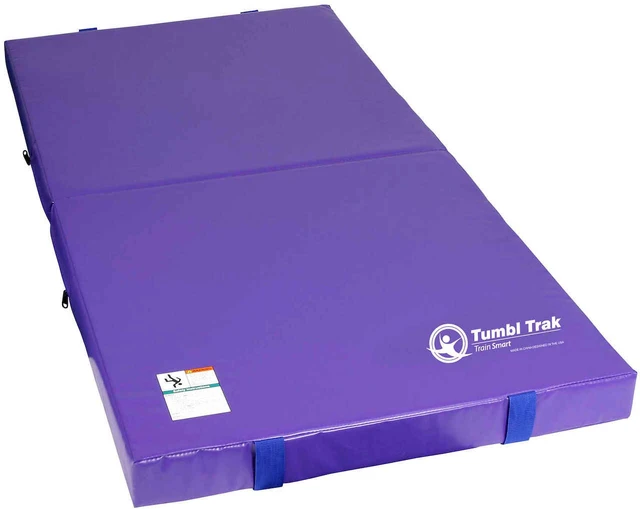
Choose the Jr. Practice Mat when you want a compact, durable mat for cushioning falls and landings at home or in smaller training stations. Its 3-ft x 6-ft x 4-in size is easy to manage, and the dual-density open-cell foam provides more cushioning than a traditional tumbling mat. The Jr. Practice Mat folds in half, includes carrying handles and a non-skid bottom, and can be used alone or paired with other shapes for drills and progressions. It also works well at the end of a low balance beam or as part of an appropriate matting setup under a junior training bar. Shipping advantage: The Jr. Practice Mat ships free to the lower 48 states.
Best for: Compact home gyms, low beam dismounts, junior training-bar setups, drills, and portable landing stations
Shop the Jr. Practice Mat
Best Soft Home Landing Mat: Home Practice Mat

Choose the Home Practice Mat when you want a soft, 6-in-thick landing surface designed specifically with home use in mind. Its 4-ft x 6-ft footprint provides more landing area than the Jr. Practice Mat while remaining manageable for a home training space. The soft fabric cover creates a comfortable surface for rolling, landing, and jumping, and the removable cover is machine washable. The Home Practice Mat is a strong choice for families who prioritize a soft feel, easy care, and compact storage. Shipping advantage: The Home Practice Mat ships free to the lower 48 states.
Best for: Home gymnastics, softer landings, beam dismounts, bar stations, and families wanting a washable fabric cover
Shop the Home Practice Mat
Best for Gym and Club Use: Practice Mats

Choose Tumbl Trak Practice Mats when you want a more traditional crash-mat or skill-cushion style surface in multiple sizes and thicknesses. These mats are designed for gymnastics, cheerleading, dance acro, martial arts, and other training environments where athletes need additional cushioning for drills, progressions, and landings. Thinner versions are useful for controlled drills and lower-profile cushioning, while thicker 6-in and 8-in options provide more depth for landing-focused stations. Several sizes fold in half, creating a useful raised block for shaping, progressions, and other drills.
Best for: Gymnastics clubs, cheer programs, dance acro programs, skill progressions, bar and beam stations, and general landing practice
Shop Practice Mats
Best for an Extra-Soft Top Layer: Soft Mats

Choose a Soft Mat when you want a softer, more compressible surface to place over an existing landing area. Soft Mats use a softer foam feel than standard Practice Mats and are especially helpful in drills where athletes benefit from a less firm landing surface. A Soft Mat is best thought of as a topper or additional cushioning layer rather than a replacement for an appropriate primary landing surface. It should not be used by itself on a hard floor.
Best for: Topper use, soft tumbling drills, confidence stations, and adding a softer feel over another appropriate mat
Shop Soft Mats
Best for Belly and Back Landings: Pit Pillow

Choose the Pit Pillow when the goal is an especially soft, inviting landing surface for drills where athletes land on their belly or back. Its low-density foam and washable denim cover create a very soft feel that can help athletes build confidence while learning shapes, progressions, and new skills. The Pit Pillow is not recommended for repeated feet-first landings. The denim cover is intended to create a soft surface for belly- and back-landing drills, and repeated foot-first impact can place concentrated stress on the fabric and may cause the cover to split over time. Because of its low-density foam and softness, the Pit Pillow should be used as a topping mat over an appropriate foam or air-filled landing surface when used outside a loose-foam pit. It is not intended to be used alone on hard surfaces. Shipping advantage: Pit Pillows ship free to the lower 48 states.
Best for: Belly and back landings, shape drills, confidence-building stations, and soft topper applications
Shop the Pit Pillow
Tumbl Trak Practice Mat Comparison
| Mat | Best For | Size / Thickness | Surface Feel | Cover / Construction | Portability / Storage | Free Shipping? |
|---|---|---|---|---|---|---|
| Jr. Practice Mat | Compact home practice, beam dismounts, bars, drills | 3 ft x 6 ft x 4 in | Cushioned, supportive | Durable vinyl with dual-density open-cell foam | Folds in half; carrying handles | Yes — lower 48 states |
| Home Practice Mat | Soft home landings and compact home gyms | 4 ft x 6 ft x 6 in | Very soft and cushy | Soft removable, washable fabric cover | Compact home-oriented design | Yes — lower 48 states |
| Practice Mats | Gym and club landing stations, drills, progressions | Multiple sizes; generally 4, 6, or 8 in thick depending on model | Supportive crash-mat feel | Vinyl cover; foam construction varies by size | Several models fold in half | Varies by product/size |
| Soft Mats | Extra-soft topper applications | Multiple sizes | Softer and more compressible | Soft single-density foam style | Varies by size | Varies |
| Pit Pillow | Belly/back landings and confidence drills | Multiple sizes; 6-12 in thick depending on model | Extra soft, low-density | Washable denim cover | Varies by size; largest size is substantial | Yes — lower 48 states |
How Thick Should a Gymnastics Practice Mat Be?
Mat thickness should be chosen based on the activity and the type of landing, not simply by assuming thicker is always better. Foam density, mat construction, the surface underneath the mat, and the athlete's skill level all matter.
Choose a 4-in Practice Mat for lower-profile cushioning and drills.
Four-inch mats are useful when athletes need more cushioning than a standard tumbling mat but still need a relatively low-profile practice surface. The Jr. Practice Mat is a compact 4-in-thick option designed for home or smaller stations.
Choose a 6-in Practice Mat when you need additional landing depth.
Six-inch mats provide more cushioning for landing-focused practice and equipment stations. The Home Practice Mat uses a soft 6-in construction for home use, while selected standard Practice Mats provide a more traditional gym-style surface.
Choose an 8-in Practice Mat for deeper landing and crash-mat applications.
Eight-inch Practice Mats provide greater depth for landing-focused stations and can also create useful raised blocks when folded. The correct mat still depends on the skill, equipment, and complete landing setup.
Practice Mat vs. Soft Mat: What's the Difference?
Choose a Practice Mat for a more supportive landing surface.
Standard Practice Mats are generally firmer and are intended to function as part of a primary crash- or landing-mat setup for drills, progressions, and landings.
Choose a Soft Mat when you want a softer topper.
Soft Mats compress more easily and are designed to add a softer feel over an appropriate existing landing surface. They should not be used alone on hard floors.
How Should You Choose Between the Home Practice Mat and Jr. Practice Mat?
Both are compact choices designed with home use in mind, and both ship free to the lower 48 states, but they feel and function differently.
Choose the Jr. Practice Mat for durability, portability, and a lower-profile 4-in surface.
Its vinyl cover is easy to wipe clean, the mat folds in half, and built-in handles make it convenient to move between stations or store.
Choose the Home Practice Mat for a softer 6-in feel and washable fabric cover.
The Home Practice Mat is thicker and softer, with a removable fabric cover that can be machine washed. It is a strong option when comfort and a soft home-training surface are top priorities.
What Should You Consider When Choosing a Practice or Landing Mat?
1. Type of Landing
Start with how the athlete will contact the mat. A supportive Practice Mat may be appropriate for many landing drills, while the softer Pit Pillow is specifically valuable for belly- and back-landing stations and is not recommended for repeated feet-first landings.
2. Mat Thickness and Foam Feel
Thickness alone does not determine the right mat. A soft 6-in home mat may feel very different from a firmer gym-style 6-in Practice Mat. Compare foam density, construction, and intended use.
3. Training Environment
Home users often prioritize compact dimensions, portability, washable covers, and shipping cost. Clubs may prioritize larger landing areas, durability, connection options, and the ability to use mats in multiple stations.
4. Storage and Portability
Consider the mat's folded dimensions as well as its open size. The Jr. Practice Mat folds in half and has handles, while several larger Practice Mats can fold into raised blocks that provide additional training uses.
5. The Complete Landing Setup
No single mat is appropriate for every skill or piece of equipment. Follow the matting recommendations for the specific apparatus and activity, and do not place soft topper-style mats directly on hard floors when the product requires an underlying landing surface.
6. Delivered Cost
Shipping can be significant on bulky gymnastics mats. The Jr. Practice Mat, Home Practice Mat, and Pit Pillow all include free shipping to the lower 48 states, making their delivered price especially useful to consider when comparing home training options.
Frequently Asked Questions About Practice Mats and Crash Mats
What is a gymnastics crash mat?
A gymnastics crash mat is a thick, cushioned mat used to provide additional impact absorption during landings, falls, skill progressions, and drills. Terms such as practice mat, crash pad, and skill cushion are also commonly used for this type of mat.
What is the difference between a tumbling mat and a practice mat?
A tumbling mat is generally firmer and thinner, creating a supportive floor surface for controlled gymnastics skills. A practice or crash mat is thicker and more compressible, providing additional cushioning for landing and progression work.
What is the best practice mat for home gymnastics?
For compact home setups, the Jr. Practice Mat is a durable, foldable 4-in option, while the Home Practice Mat provides a softer 6-in surface with a washable fabric cover. Both ship free to the lower 48 states. The better choice depends on the athlete, equipment, skills, and available space.
Which Tumbl Trak practice mats ship free?
The Jr. Practice Mat, Home Practice Mat, and Pit Pillow ship free to the lower 48 states. Shipping terms can change, so confirm the current product page before ordering.
Is the Pit Pillow good for feet-first landings?
The Pit Pillow is best suited for belly- and back-landing drills and is not recommended for repeated feet-first landings. Concentrated foot impact can place extra stress on the denim cover and may cause it to split over time.
Can the Pit Pillow be used by itself on a hard floor?
No. Because of its soft, low-density foam, the Pit Pillow should be used as a topping mat over another appropriate foam or air-filled landing surface when used outside a loose-foam pit.
What is the difference between a Practice Mat and a Soft Mat?
Practice Mats are generally more supportive and are intended for use as part of a primary landing or crash-mat setup. Soft Mats compress more and are designed as a softer topper over another appropriate matting surface.
Can Practice Mats be folded into training blocks?
Several Tumbl Trak Practice Mats fold in half, allowing them to serve as raised blocks for selected shaping drills, progressions, and stations in addition to their use as landing mats.
How thick should a gymnastics practice mat be?
The right thickness depends on the skill and landing. Four-inch mats provide lower-profile cushioning, while 6-in and 8-in mats provide greater depth for landing-focused stations. Foam density, athlete size, equipment, and the complete training setup should also be considered.
What mat should I use under a Jr. Bar PRO?
Tumbl Trak recommends no less than 6 in of total matting beneath the Jr. Bar PRO. Follow the specific Jr. Bar PRO matting guidance when selecting and arranging mats.
Still Not Sure Which Practice Mat to Choose?
For a compact, durable home option: Choose the Jr. Practice Mat.
For a very soft home landing surface with a washable cover: Choose the Home Practice Mat.
For traditional gym and club landing stations: Choose a standard Practice Mat in the appropriate size and thickness.
For an extra-soft topper: Choose a Soft Mat.
For belly- and back-landing drills: Choose the Pit Pillow.
Need Help Choosing the Right Equipment?
Our team is happy to help you evaluate athlete age, skill level, available space and budget to find the perfect setup.
Contact Tumbl Trak Support