

Air Track & Air Floor Buying Guide for Gymnastics, Cheer, Dance, Martial Arts, & Home Training
Choosing the right inflatable tumbling surface depends on where it will be used, how much rebound is wanted, how often it will be moved or stored, and whether portability or long-term durability is the higher priority. Tumbl Trak offers three primary air tumbling surfaces: the Air Floor, Air Floor PRO, and Air Trak. The Air Floor and Air Floor PRO are sealed air products that hold pressure after inflation. The Air Trak is a constant-flow product that uses a blower while it is in use. Each design has distinct advantages in feel, portability, maintenance, longevity, noise, and training application. Tumbl Trak has decades of experience with air-based gymnastics training products. Use this guide to compare width, thickness, inflation style, rebound, portability, care requirements, and best use so you can choose the right air surface for your athletes, home, or program.
Why Air Track Width Matters for Safety
Width is more than a comfort feature. Athletes do not always tumble in a perfectly straight line, especially when learning new skills. When a gymnast travels toward the edge of an inflatable surface, the softer outer edge can provide less stable support under the foot. That can increase the risk of an awkward step or rolled ankle. A wider air product provides more usable training space and gives the athlete more room to remain on the stable center portion of the surface. This is one reason Tumbl Trak places particular emphasis on width when comparing air products.
Which Tumbl Trak Air Product Is Right for You?
Best Low-Profile Sealed Air Surface: Air Floor

Choose the Air Floor when you want a low-profile inflatable surface that adds rebound without adding significant height. It is approximately 5 ft wide and about 3 in thick, making it useful for gymnastics, cheer, dance, martial arts, and tumbling stations where an appropriate padded surface is already available underneath. The Air Floor is a sealed product, so once it is inflated it does not need a blower running continuously. That makes it quiet, lightweight, and relatively easy to move and store. Its low 3-in profile creates another practical advantage: athletes can often do their run-up on the surrounding floor and use the Air Floor primarily for the tumbling pass itself. Because the transition onto the surface is relatively low, a customer may not need as much Air Floor length as they would with a taller inflatable track that requires a dedicated raised runway. The lower profile can also make spotting easier for coaches because they can remain closer to the athlete's working height from the side of the surface. Compatible Air Floors can be connected end-to-end using the built-in hook-and-loop flaps, allowing programs to combine units when a longer tumbling lane is needed. This makes the Air Floor useful not only as a single tumbling strip, but also as part of a flexible station system that can change with the day’s lesson plan. Because sealed air products are more susceptible to punctures, seam issues, and gradual air-loss problems than constant-flow equipment, proper transport, storage, and care are important . Owners should expect more maintenance over the life of the product and should be prepared to perform or arrange repairs when needed.
Best for: Lower-profile tumbling, portable training stations, home or gym use over appropriate padded flooring, and customers who prioritize quiet operation and portability
Shop the Air Floor
Best All-Around Sealed Air Track for Home or Gym: Air Floor PRO

Choose the Air Floor PRO when you want a wider, thicker, and more responsive sealed air surface. At approximately 6.5 ft wide and 8 in thick, it gives athletes more training area and more rebound than the standard Air Floor. Its added width is especially important for athletes who may drift sideways while tumbling. Staying farther from the softer outside edges helps reduce the chance of an unstable foot placement near the edge of the product. Like the Air Floor, the Air Floor PRO is quiet during use because it does not require a continuously running blower. It is also highly portable for its size. The tradeoff is that sealed construction requires more careful handling, transporting, and storage, and owners should expect more repair needs and a shorter practical service life than a comparable constant-flow Air Trak that is well maintained. The Air Floor PRO also includes features that help coaches use it as more than a tumbling track. End hook-and-loop flaps allow compatible units to connect for longer layouts. D-rings provide attachment points for creating or organizing stations with compatible equipment, while the center line gives athletes and coaches a clear visual reference for alignment, hand and foot placement, beam-style drills, dance work, and other movement activities. Because the Air Floor PRO is approximately 8 inches high, Tumbl Trak recommends using Booster Blocks when a raised runway is beneficial. Booster Blocks can be positioned as a transition runway leading onto the Air Floor PRO or placed alongside the surface to provide a convenient platform for coaches during spotting.
Best for: Home or club tumbling, bar-side and dance stations, visual-placement drills, customers wanting more rebound and width, and users who value portability and quiet operation
Shop the Air Floor PRO
Best for Maximum Width, Rebound & Long-Term Club Use: Air Trak
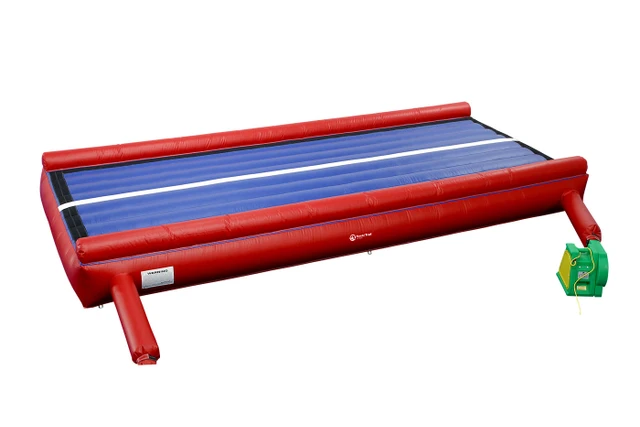
Choose the Air Trak when you want a very wide, deep, high-rebound tumbling surface for gymnastics or cheer programs. At approximately 9 ft wide and about 22 in high, it provides significantly more space and depth than the sealed Air Floor products. The Air Trak uses a constant-flow blower while it is in use. That means the blower creates continuous background noise, but the construction is generally more forgiving of small air leaks because the blower continuously supplies air. For customers focused on long-term use and durability, especially in a club environment, this can be an important advantage. The Air Trak is less convenient to move and requires the blower during use, but it is often the better choice when longevity, width, and a large trampoline-like tumbling surface matter more than ultra-light portability or silent operation.
Best for: Gymnastics clubs, cheer programs, larger training spaces, beginner tumblers who benefit from extra width, and buyers prioritizing durability and long-term use
Shop the Air Trak
What Sets Tumbl Trak Air Floors Apart?
Tumbl Trak Air Floors are designed to support flexible lesson planning, not only straight tumbling passes. Their integrated features help coaches adapt the same inflatable surface to different athletes, stations, and training goals.
Connect Units to Create the Length You Need
Built-in hook-and-loop end flaps allow compatible Air Floor units to connect end-to-end. A program can use one unit for a compact station or combine units to create a longer tumbling lane without committing to one permanently sized surface.
Use D-Rings to Help Build Training Stations
Integrated D-rings provide convenient attachment points for compatible equipment and station setups. They can help coaches organize side stations and incorporate the Air Floor into a broader circuit rather than treating it as a single-purpose tumbling product.
Use the Center Line for Visual Placement
The Air Floor PRO’s center line gives athletes a consistent visual reference for staying centered, aligning hands and feet, and understanding body placement. It can also support beam-style progressions, dance lines, jumps, leaps, and other drills where visual alignment matters.
Go Beyond Tumbling
Air Floors can serve as side stations near bars, raised surfaces for shaping and flexibility work, dance and acro lanes, martial-arts stations, and visual-placement areas. This versatility can be especially valuable in busy gyms where equipment needs to support several classes and lesson plans throughout the day.
Air Floor vs. Air Floor PRO vs. Air Trak
| Feature | Air Floor | Air Floor PRO | Air Trak |
|---|---|---|---|
| Best For | Low-profile rebound over padded flooring | Home/gym use with more width and rebound | Large club or cheer tumbling stations |
| Approx. Width | 5 ft | 6.5 ft | 9 ft |
| Approx. Height | 3 in | 8 in | 22 in |
| Inflation Type | Sealed | Sealed | Constant-flow |
| Blower Runs During Use? | No | No | Yes |
| Noise During Use | Very quiet | Very quiet | Blower noise |
| Portability | Excellent | Very good | Good, but more substantial |
| Care / Repair Needs | Higher | Higher | Generally lower sensitivity to minor air leaks |
| Expected Practical Longevity | Typically shorter than constant-flow products | Typically shorter than constant-flow products | Often better suited to long-term heavy club use |
| Run-Up / Spotting Considerations | Low 3-in profile may allow run-up from floor; easier side spotting | 8-in height may benefit from Booster Blocks for runway and coach spotting | Raised constant-flow surface; setup depends on program and surrounding equipment |
| Connections / Training Features | End hook-and-loop flaps connect compatible units | End connections, D-rings, and center line support station building and visual-placement drills | Large constant-flow surface focused primarily on tumbling |
| Key Advantage | Low profile, quiet, portable | Width, rebound, quiet portability | Maximum width, depth, and long-term durability |
Sealed Air Product vs. Constant-Flow Air Trak: Which Should You Choose?
Choose a sealed Air Floor or Air Floor PRO for portability and quiet operation.
Sealed air products hold pressure after inflation, so there is no blower noise during training. They are lighter and easier to transport than a large constant-flow Air Trak, making them especially attractive for home use, mobile programs, events, and facilities that frequently move equipment.
Choose an Air Trak for durability and long-term heavy use.
Constant-flow construction relies on a blower to maintain shape during use. The blower adds noise and requires power, but the system is less dependent on perfectly sealed air retention. For a busy gym or cheer program, that can translate into fewer leak-related interruptions and a longer practical service life.
Sealed Air Products Require More Care
Owners of sealed Air Floors should be prepared to protect the product from sharp objects, abrasive surfaces, improper folding, dragging, and careless storage. Transport and storage practices have a direct effect on the life of the product. Small punctures and air leaks can often be repaired, but repair needs are a normal consideration with sealed air equipment.
Air Floor vs. Air Floor PRO: What's the Difference?
Both are sealed inflatable tumbling surfaces, but the Air Floor PRO is wider, substantially thicker, and provides more rebound. The standard Air Floor is approximately 5 ft wide and 3 in thick and should be used over an appropriate padded surface. The Air Floor PRO is approximately 6.5 ft wide and 8 in thick, providing a larger and more responsive standalone training surface for appropriate indoor use. Choose the Air Floor when you already have padded flooring and want a low-profile inflatable surface. Choose the Air Floor PRO when you want greater width, more rebound, and a thicker surface.
Air Floor PRO vs. Air Trak: What's the Difference?
The Air Floor PRO is a sealed product about 8 in thick. Once inflated, it does not require a blower to remain running during use. The Air Trak is approximately 22 in high, about 9 ft wide, and uses a constant-flow blower during training. Choose the Air Floor PRO if portability, quiet operation, and a lower-profile surface are the priorities. Choose the Air Trak if maximum width, deeper rebound, long-term club use, and durability are more important than blower noise or portability.
How Does Air Track Height Affect Run-Up and Spotting?
Air Floor: Low Profile Means More Flexibility
At only about 3 in high, the Air Floor can often be approached directly from the surrounding floor. Athletes may be able to complete their run-up on the floor and use the Air Floor only for the tumbling portion of the pass. This can reduce how much inflatable length is needed for a particular training setup. The low profile also keeps the athlete closer to normal floor height, which can make it easier for coaches to position themselves alongside the surface for spotting.
Air Floor PRO: Plan for the 8-in Height
The Air Floor PRO provides more rebound and cushioning, but its approximately 8-in height creates a more noticeable transition from the surrounding floor. Tumbl Trak recommends Booster Blocks when a raised runway is needed to create an easier transition to the Air Floor PRO. Booster Blocks can also be positioned beside the Air Floor PRO to give coaches a raised spotting platform, helping them work from a height that better matches the athlete on the elevated surface.
What Should You Consider When Choosing an Air Track?
1. Width and Athlete Safety
A wider air surface gives athletes more room to stay away from the softer outside edges. This is especially important for beginners and athletes learning skills who may not yet tumble in a perfectly straight line. More width can reduce the chance of an unstable foot placement near the edge.
2. Rebound and Surface Height
The standard Air Floor offers a low-profile rebound surface. The Air Floor PRO provides more height and response. The Air Trak provides the deepest, trampoline-like feel of the three.
3. Sealed vs. Constant-Flow Construction
Sealed products are quieter and more portable, but require more careful handling and may need puncture or leak repairs over time. Constant-flow equipment requires a blower and produces noise but is generally better suited to long-term heavy use.
4. Portability and Storage
Air Floor and Air Floor PRO are excellent choices when equipment must be moved, transported, or stored frequently. The Air Trak is portable compared with a permanent tumbling track, but its larger size and blower make it more substantial to handle.
5. Training Surface Underneath
The standard Air Floor should be used over an appropriate padded surface. The Air Floor PRO and Air Trak provide considerably more depth, but every setup should be evaluated for the athlete, skill, equipment, and surrounding landing area.
6. Noise
The Air Floor and Air Floor PRO are quiet once inflated. The Air Trak uses a constant-flow blower during use, so blower noise is part of the training environment.
7. Maintenance Expectations
Customers choosing a sealed air product should plan for more careful transport, storage, inspection, and occasional repair. A constant-flow Air Trak is generally less sensitive to minor leaks because the blower continuously replaces air.
8. Connections, Visual Cues, and Station Versatility
If the surface will be used across several classes or stations, compare more than its rebound and dimensions. End connections can create longer layouts, D-rings can help integrate compatible station equipment, and a center line can give athletes useful visual feedback. These features make an Air Floor valuable for bar-side stations, dance, acro, alignment drills, and movement circuits in addition to tumbling.
What Should You Look for When Buying an Air Track?
Width
Do not compare products only by length. A narrower air track may cost less but also provides less usable training space and places the athlete closer to the softer edges. Compare width as carefully as length and thickness.
Material and Construction
Look at vinyl quality, reinforced base fabric, drop-stitch density on sealed flat air products, seam construction, valves, and repairability. These details affect how well an inflatable training surface holds up to repeated use.
Included Pump or Blower
Pump requirements vary. Sealed products are inflated and then disconnected from the pump, while a constant-flow Air Trak requires its blower during use. Confirm what is included and whether the equipment needs continuous power.
Repair Support
Inflatable products can eventually require repair. Consider whether repair materials, replacement parts, and knowledgeable customer support are readily available before choosing solely on purchase price.
Frequently Asked Questions About Air Tracks and Air Floors
What is the difference between an Air Floor and an Air Trak?
The Air Floor is a sealed, low-profile inflatable surface that holds pressure after inflation. The Air Trak is a much deeper, wider constant-flow product that uses a blower while it is being used.
Which Tumbl Trak air product is best for home gymnastics?
The Air Floor PRO is often the strongest all-around home choice when a thicker, wider, more responsive surface is desired. The standard Air Floor is a good option when an appropriate padded surface is already available underneath and a lower profile is preferred.
Why does air-track width matter?
Width gives athletes more room to remain on the stable center portion of the surface. Athletes who drift toward a softer outside edge can experience an unstable foot placement, increasing the possibility of an awkward step or rolled ankle.
Does an air track need to stay plugged in?
The Air Floor and Air Floor PRO are sealed products and do not need a pump running continuously after inflation. The Air Trak is a constant-flow product and requires its blower during use.
Which type of air product lasts longer?
A well-maintained constant-flow Air Trak is generally better suited to long-term, heavy club use. Sealed Air Floors are lighter and more portable but are more susceptible to punctures, leaks, and seal-related repairs and therefore usually require more care over their usable life.
Are sealed air products harder to maintain?
They require more attention to transport and storage because punctures, abrasion, and seam or valve leaks can affect their ability to hold pressure. Owners should expect occasional repair needs and should follow Tumbl Trak's care instructions.
Which option is quieter?
The Air Floor and Air Floor PRO are quiet during use because the pump is disconnected after inflation. The Air Trak uses a blower continuously, so blower noise is present during training.
Which option is easiest to transport?
The sealed Air Floor products are generally easier to transport because they are lighter and do not require a continuously connected blower during use. The Air Trak is portable compared with permanent equipment but is substantially larger.
Can I use the Air Floor directly on a hard floor?
The standard Air Floor should be placed over an appropriate padded surface rather than used alone on a hard floor. Follow the product-specific setup guidance for the Air Floor, Air Floor PRO, or Air Trak.
Can air products be used outdoors?
Follow the specific product instructions before outdoor use. Abrasive surfaces, debris, heat, moisture, and sharp objects can damage inflatable equipment. Indoor use on a clean, appropriate surface generally provides the best protection for the product.
Can Tumbl Trak Air Floors be used for activities other than tumbling?
Yes. Depending on the model and setup, Air Floors can be used for bar-side stations, beam-style alignment drills, dance and acro work, jumps, shaping, flexibility, martial arts, and other movement activities. Connection flaps, D-rings, and the Air Floor PRO center line help coaches create more varied stations and visual-placement drills.
Still Not Sure Which Air Product to Choose?
For a quiet, low-profile air surface that can often use the surrounding floor as the run-up: Choose the Air Floor.
For a wider, thicker, highly portable sealed air track: Choose the Air Floor PRO.
For maximum width, deeper rebound, and long-term club use: Choose the Air Trak.
Need Help Choosing the Right Equipment?
Our team is happy to help you evaluate athlete age, skill level, available space and budget to find the perfect setup.
Contact Tumbl Trak Support