

How to Choose the Best Balance Beam for Home or Gym Training
Looking for the right gymnastics balance beam? The best choice depends on the gymnast’s experience level, available training space, the skills being practiced, and how closely you want the beam to feel like a competition balance beam. Tumbl Trak offers several balance beam options designed for different stages of training—from a soft, lightweight floor beam for first-time gymnasts to competition-width wood beams and the Laser Balance Beam, which uses visual cues to help athletes improve positioning and build confidence. Use this guide to compare the options and find the best beam for your gymnast, home training space, or gymnastics facility.
Which Tumbl Trak Balance Beam Is Right for You?
Best for Young Beginners: Sectional Balance Beam

Choose the Sectional Balance Beam for preschoolers, recreational gymnasts, and athletes who are just learning basic balance beam skills. Its soft foam construction, low profile, and lightweight design make it comfortable for beginning athletes and easy for parents or coaches to move and store. Each 4-ft section connects to additional sections to create a longer training beam.
Choose the Sectional Beam if you want:
- A soft beam for beginning skills
- A beam that sits directly on the floor
- Something lightweight and easy to store
- The ability to connect multiple sections
- A beam for preschool or recreational gymnastics stations
Best for: Preschool, recreational gymnastics, beginners, and basic home practice
Shop the Sectional Balance Beam
Best for Competition-Style Training and Flexibility: Addie Balance Beam

Choose the Addie Balance Beam when you want the shape, width, and feel of a competition beam in a low-to-the-ground design. It has a hollow wood core, rounded top corners, bowed sides to mimic a competition beam, a padded synthetic suede surface, and a 10-cm-wide training surface—the same width as a competition balance beam. The Addie is available in 4-ft and 8-ft lengths. The compact 4-ft beam works well for focused stations such as jumps, turns, relevés, handstands, and balance drills. The 8-ft model provides more room for combinations and progressing skills. Compatible beams can be joined with an Addie Beam Connector Bracket to create a 12-ft or 16-ft configuration. Optional Leg Risers raise either beam to approximately 12 in.
Choose the Addie Beam if you want:
- A competition-width surface and competition-style shape
- A choice between 4-ft and 8-ft lengths
- The ability to build a 12-ft or 16-ft configuration
- Optional height progression
- Compatibility with the Laser Balance Beam Conversion Top on the 8-ft model
Best for: Gymnasts who want a versatile, competition-style training experience at home or in the gym
Shop the Addie Balance Beam
Best for Easy Setup and Stability: Brianna Balance Beam
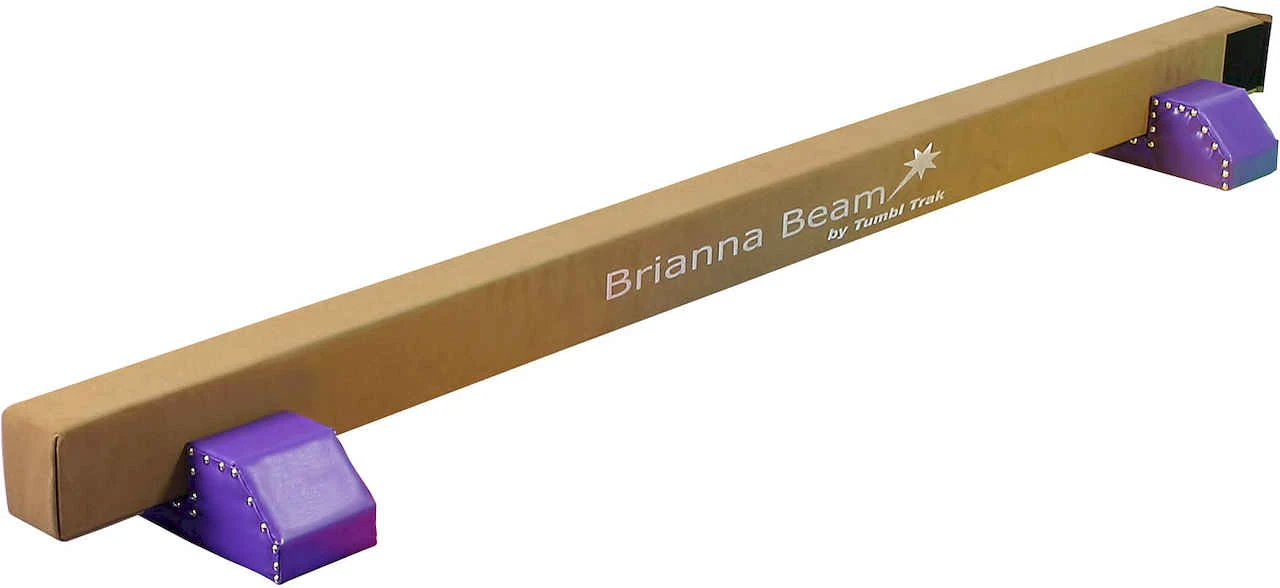
Choose the Brianna Balance Beam for a sturdy, competition-width low beam that requires no tools for setup. The Brianna is 8 ft long and 10 cm wide, rectangular in shape, with a hollow wood core, padded top, and synthetic suede surface. Its included base pieces keep the top of the beam approximately 7 in off the floor. Two Brianna Beams can be connected to create an approximately 16-ft training surface. Optional Brianna Beam Leg Risers add 6 in of height, bringing the top of the beam to approximately 13 in.
Choose the Brianna Beam if you want:
- A competition-width training surface
- A sturdy, low-profile wood beam
- Quick, tool-free setup
- The ability to connect beams for a longer surface
- Optional risers for height progression
Best for: Beginner through advanced gymnasts who value simple setup and a stable feel
Shop the Brianna Balance Beam
Best for Skill Development and Visual Feedback: Laser Balance Beam
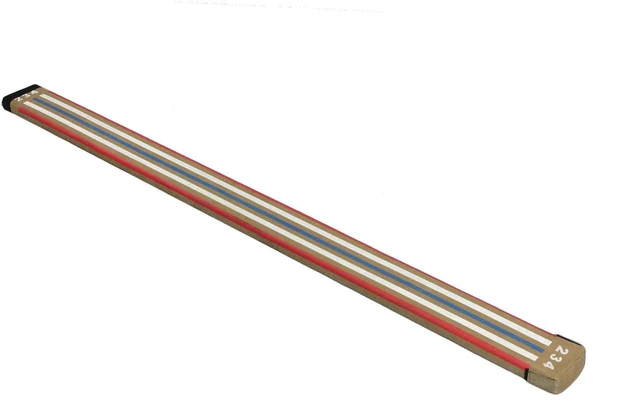
Choose the Laser Balance Beam when the goal is to teach better positioning, spatial awareness, and confidence. Its 7-in-wide surface provides extra room for learning skills, while colored lines give gymnasts visual references for hand and foot placement. Two white lines show where the edges of a regulation-width competition beam would be. A center line and additional markings help athletes understand their position during a skill and recognize when they are moving toward the edge. Choose from the approximately 8-ft Laser Beam Lite or the longer Laser Beam Pro.
Choose the Laser Balance Beam if you want:
- Visual feedback for hand and foot positioning
- More physical space for learning new skills
- Help transitioning skills to a regulation-width beam
- A tool focused on confidence and body awareness
- A low training beam for home or gym use
Best for: Skill development, confidence building, visual learners, and progressive beam training
Shop the Laser Balance Beam
Addie Balance Beam vs. Brianna Balance Beam: Which Should You Choose?
The Addie and Brianna are both sturdy, competition-width training beams with hollow wood cores, padding, and synthetic suede surfaces, but they are designed with slightly different priorities in mind.
Choose the Addie Balance Beam for competition-style feel and flexibility.
The Addie closely resembles the shape and feel of a competition beam. It is the more flexible option because it comes in 4-ft and 8-ft lengths, supports 12-ft or 16-ft connected configurations, offers optional risers, and the 8-ft model accepts the Laser Balance Beam Conversion Top.
Choose the Brianna Balance Beam for simple setup, stability, and a slightly higher starting position.
The Brianna emphasizes easy setup and stability. Its included bases attach without tools, and it begins approximately 7 in off the floor. Two 8-ft Brianna Beams can connect to create an approximately 16-ft surface, and optional risers bring the total height to approximately 13 in.
| Feature | Addie Balance Beam | Brianna Balance Beam |
|---|---|---|
| Best For | Competition-style feel and flexibility | Easy setup and sturdy low-beam training |
| Laser Conversion Top Compatible? | Yes — 8-ft Addie | No |
| Available Lengths | 4 ft and 8 ft | 8 ft |
| Beam Width | 10 cm / approximately 4 in | 10 cm / approximately 4 in |
| Standard Height | Approximately 5¼ in | Approximately 7 in |
| Core | Hollow wood | Hollow wood |
| Training Surface | Padded synthetic suede | Padded synthetic suede |
| Beam Shape | Curved sides and rounded corners similar to a competition beam | Competition-width surface with a padded top |
| Standard Base | Rubber-coated steel feet | Padded decorative base pieces |
| Assembly | Simple assembly with included hardware | Tool-free setup |
| Expansion Options | Join compatible 4-ft and 8-ft beams for 12-ft or 16-ft configurations | Connect two 8-ft beams for an approximately 16-ft surface |
| Optional Raised Height | Approximately 12 in total | Approximately 13 in total |
| Best Reason to Choose It | Versatility and competition-like training | Easy setup and sturdy feel |
Still Deciding Between the Addie and Brianna?
For most families looking for a beam that can grow with their gymnast, we recommend the Addie Balance Beam. Its choice of lengths, expansion options, competition-style design, optional risers, and Laser Conversion Top compatibility make it the more versatile choice. Choose the Brianna Balance Beam if tool-free setup, a sturdy feel, and a slightly higher starting position are more important to you.
Tumbl Trak Balance Beam Comparison
| Feature | Sectional | Addie | Brianna | Laser Beam |
|---|---|---|---|---|
| Best For | Young beginners and basic balance training | Competition-style training and flexibility | Easy setup and stable training | Skill development and visual positioning |
| Recommended Use | Preschool, recreation, first skills | Home training, focused stations, competition transition | Home or gym low-beam training | Visual positioning, confidence, progressive skill development |
| Skill Level | Beginner | Beginner–Advanced | Beginner–Advanced | Beginner–Advanced |
| Length | 4 ft per section | 4 ft or 8 ft | 8 ft | Approximately 8 ft Lite or 16 ft Pro |
| Training Surface Width | 4 in | 10 cm / approximately 4 in | 10 cm / approximately 4 in | 7 in with visual competition-width boundaries |
| Height | 4 in | Approximately 5¼ in | Approximately 7 in | Low-profile training beam; varies by model |
| Construction | Firm foam | Hollow wood core | Hollow wood core with ¼-in top padding | Sectioned wood core |
| Surface | Synthetic suede | Padded synthetic suede | Padded synthetic suede | Padded synthetic suede with visual training lines |
| Competition Width? | Yes—4-in top | Yes | Yes | Wider surface with competition-width visual markings |
| Expansion Options | Connect additional sections | Create 12-ft or 16-ft configurations with a compatible bracket | Connect two beams for an approximately 16-ft surface | Choose Lite or Pro based on needed length |
| Can Be Raised? | No | Yes—optional Leg Risers | Yes—optional Leg Risers | Designed primarily for low training |
| Easy to Store or Move | Excellent | Good; 4-ft option is especially compact | Good | Varies by model |
| Key Advantage | Soft, lightweight, and beginner-friendly | Competition-like feel and versatility | Stability and tool-free setup | Visual feedback and confidence building |
At a Glance: Which Beam Should I Buy?
Choose the Sectional Balance Beam if: Your gymnast is young, new to gymnastics, or needs a soft and forgiving surface for basic balance skills.
Choose the Addie Balance Beam if: You want a versatile low beam that closely resembles the width, shape, and feel of a competition balance beam.
Choose the Brianna Balance Beam if: You want a sturdy competition-width beam with tool-free setup and a slightly higher starting position.
Choose the Laser Balance Beam if: Your priority is improving positioning, confidence, and the progressive transfer of skills to a regulation-width beam.
Balance Beam Accessories and Upgrades
The right accessories can help a balance beam grow with the gymnast as skills and confidence improve.
Laser Balance Beam Conversion Top

The Laser Balance Beam Conversion Top is an 8-ft-long, 7-in-wide training accessory that fits over an existing compatible beam. It adds the Laser Beam visual positioning system to an 8-ft Addie Balance Beam or most competition-size beams. Two straps secure it to the beam, and two Conversion Tops can cover most of a full-length competition beam. Important: This is an accessory, not a standalone floor beam. It does not fit the Brianna Balance Beam. Shop the Laser Balance Beam Conversion Top
Addie Balance Beam Leg Risers

Optional Addie Balance Beam Leg Risers replace the standard feet and raise either Addie Beam size to approximately 12 in. The risers cannot be used at the same time as the Addie Beam Connector Bracket. Shop Addie Beam Leg Risers
Brianna Balance Beam Leg Risers

Optional Brianna Beam Leg Risers add approximately 6 in to the standard bases, bringing the top of the beam to approximately 13 in. They allow gradual height progression while the gymnast continues using the same familiar training surface. Shop Brianna Beam Leg Risers
What Should You Look for When Choosing a Gymnastics Balance Beam?
1. The Gymnast’s Experience Level
A young or beginning gymnast may benefit from a soft, low beam such as the Sectional Balance Beam. As skills progress, a competition-width wood beam such as the Addie or Brianna can provide a more realistic training experience. Athletes learning more complex skills may benefit from the wider Laser Balance Beam and its visual positioning cues.
2. Beam Width
A regulation gymnastics balance beam is approximately 10 cm, or 4 in, wide. Training on a competition-width surface helps gymnasts become familiar with the available space. A wider training beam serves a different purpose: the Laser Beam provides extra physical width while visually identifying the boundaries of a competition-width beam.
3. Beam Length
A 4-ft beam works well for turns, jumps, handstands, balance drills, and focused skill stations. An 8-ft beam provides more room for connected skills, leaps, acro skills, and longer combinations. Extended configurations are useful for longer series and more complete beam sequences.
4. Beam Height
For many athletes, skill development begins close to the floor. A low beam lets the gymnast focus on technique and confidence without significant height. Optional risers for the Addie and Brianna provide a way to increase height gradually.
5. Storage and Available Space
The Sectional Beam is particularly lightweight and easy to move, while the 4-ft Addie offers a compact competition-style alternative. Before choosing a longer beam, measure the intended area and allow adequate space around the beam for mounting, dismounting, and appropriate matting.
6. How the Beam Will Be Used
If the goal is learning basic balance, consider the Sectional Beam. For a competition-style surface, consider the Addie or Brianna. For visual positioning and confidence on new skills, consider the Laser Balance Beam.
Frequently Asked Questions About Gymnastics Balance Beams
Which Tumbl Trak balance beam is best for beginners?
For young children and first-time gymnasts, the Sectional Balance Beam is generally the best starting point because of its foam construction, low height, and lightweight design. For a beginner ready for a firmer, competition-style surface, the Addie Balance Beam is another excellent option.
Which Tumbl Trak beam is most like a competition balance beam?
The Addie Balance Beam is designed to closely resemble the width, shape, and feel of a competition beam while remaining low to the floor. The Brianna Balance Beam also offers a competition-width synthetic suede surface and sturdy wood-core design.
What is the difference between the Addie and Brianna Balance Beams?
Both are competition-width wood-core beams with synthetic suede surfaces. The Addie comes in 4-ft and 8-ft lengths, has a competition-style rounded profile, supports more length configurations, and accepts optional risers and the Laser Conversion Top on its 8-ft model. The Brianna is an 8-ft beam with tool-free bases, a 7-in standard height, and the ability to connect with another Brianna Beam.
What is the difference between the Laser Balance Beam and a regular balance beam?
A traditional competition-width beam is approximately 4 in wide. The Laser Balance Beam has a wider 7-in training surface with colored visual markings. White lines show the boundaries of a regulation-width beam, while additional markings help athletes recognize their position and build confidence before transferring skills to a narrower or higher beam.
Is the Laser Balance Beam 4 inches wide?
No. The Laser Balance Beam is approximately 7 in wide, but visual lines indicate where the edges of a regulation-width balance beam would be. The wider design is intentional.
Can Tumbl Trak balance beams be connected together?
Yes, several models offer expansion options. Sectional Beams connect end-to-end. Compatible 4-ft and 8-ft Addie Beams can be joined with an Addie Beam Connector Bracket to create 12-ft or 16-ft configurations. Brianna Beams can connect to create a longer surface. Always use the connection method designed for the specific beam.
Can I raise a Tumbl Trak balance beam as my gymnast improves?
The Addie and Brianna Balance Beams both offer optional risers. Addie risers raise the beam to approximately 12 in; Brianna risers add 6 in, bringing its total height to approximately 13 in.
What is the best balance beam for a small home training space?
For limited space, consider the 4-ft Addie or 4-ft Sectional Balance Beam. The Sectional is especially easy to move and store, while the 4-ft Addie provides a compact competition-width wood beam for focused skill practice.
What is the best balance beam for practicing turns and jumps at home?
The 4-ft Addie Balance Beam is particularly well suited for turns, jumps, relevés, handstands, and individual beam drills. Athletes who want additional visual feedback may also benefit from the Laser Balance Beam.
Which home beam works with the Laser Balance Beam Conversion Top?
The 8-ft Addie Balance Beam is compatible with the Laser Balance Beam Conversion Top. The Brianna Balance Beam is not compatible with the Conversion Top. If you think you may want to add the Laser training surface later, that compatibility can be an important reason to choose the Addie.
Can the Laser Balance Beam Conversion Top be used by itself?
No. The Laser Balance Beam Conversion Top is an accessory, not a standalone floor beam. It must be secured to a compatible 8-ft Addie Balance Beam or competition-size beam, and it is not compatible with the Brianna Balance Beam.
Do I need a mat under a home gymnastics balance beam?
Appropriate matting should be considered whenever gymnastics skills are practiced. The amount and type of matting depend on the beam height, skills being performed, athlete’s experience, and training environment. Gymnasts should train within their ability level and under appropriate supervision.
Still Not Sure Which Balance Beam to Choose?
- For a young or first-time gymnast: Start with the Sectional Balance Beam.
- For the most versatile competition-style home beam: Choose the Addie Balance Beam.
- For a sturdy, competition-width beam with tool-free setup: Choose the Brianna Balance Beam.
- For visual skill training and confidence development: Choose the Laser Balance Beam.
- Already own a compatible Addie or competition beam? Add the Laser Balance Beam Conversion Top.
Need Help Choosing the Right Equipment?
Our team is happy to help you evaluate athlete age, skill level, available space and budget to find the perfect setup.
Contact Tumbl Trak Support